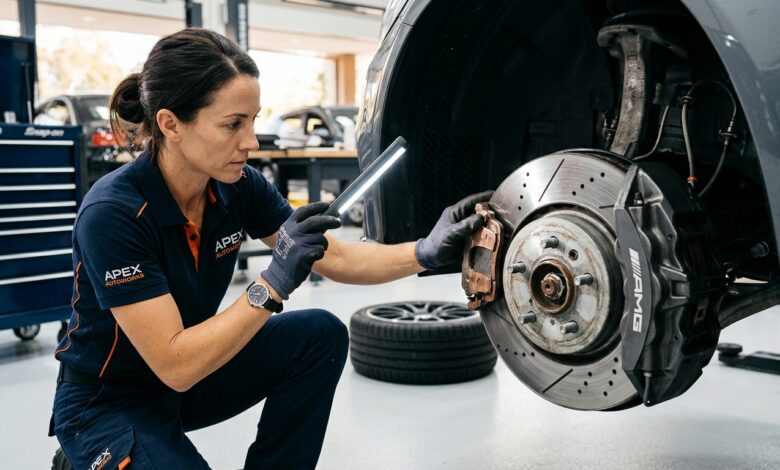
You step on the brake pedal as you approach a traffic light. In addition, a sharp, piercing screech rings out from your wheel wells. Hearing your car brakes squeak when slowing down is an unnerving experience for any motorist. However, a squealing brake does not always mean your braking system is on the verge of sudden failure.
In fact, modern automotive disc braking systems generate an array of acoustic frequencies during everyday operation. While certain light squeaks stem from harmless morning moisture or road dust. Furthermore, other high-pitched vibrations act as urgent warnings that your friction pads need immediate replacement. Specifically, in this comprehensive diagnostic guide. Furthermore, we examine the mechanical causes behind brake noise, explain how wear indicators function. In addition, outline practical steps to restore quiet, dependable stopping power.
How Brake Friction Creates Squeaking Frequencies
To understand why brake squeal occurs, you must consider the physics of disc braking. Furthermore, when you press the brake pedal. Furthermore, hydraulic fluid clamps the brake caliper pistons firmly against the brake pads. Consequently, the abrasive friction material presses tightly against the rotating cast-iron brake rotor. Furthermore, converting vehicle kinetic energy into intense thermal energy.
Because friction contact is never perfectly frictionless. Furthermore, microscopic surface imperfections cause the pad to grip and slip thousands of times per second. This rapid micro-vibration resonates through the steel backing plate and caliper bracket. Specifically, if this harmonic oscillation reaches frequencies between 1. Furthermore, 000 Hz and 12,000 Hz, your ears perceive it as a loud, high-pitched squeal. Therefore, automobile manufacturers install anti-rattle clips, rubberized shims, and vibration dampeners specifically to absorb these audible vibrations.
Top Reasons Why Car Brakes Squeak When Stopping
When investigating noisy brakes, technicians consistently encounter four common mechanical conditions:
- Acoustic Wear Indicators (Brake Squealers): Most quality brake pads feature a small steel tab riveted to the pad backing plate. Furthermore, when your friction lining wears down to approximately 2 millimeters. Furthermore, this metal tab rubs directly against the spinning rotor face. As a result, it emits a persistent, intentional screech alerting you to schedule pad replacement immediately.
- Surface Glazing from Heavy Thermal Stress: Repeated emergency braking or riding the brakes down steep hills overheats the pad surface. Consequently, the organic binder resins melt and harden into a smooth, glassy mirror finish. This glazed surface loses frictional bite and vibrates erratically against the rotor.
- Overnight Rust and Environmental Moisture: Cast-iron brake rotors develop a thin film of reddish surface oxidation overnight in humid or rainy weather. Furthermore, when you drive the vehicle the next morning. Furthermore, the pads scrape off this flash rust during your first few stops. Furthermore, causing temporary squeaking that vanishes after a mile.
- Dry or Missing Caliper Guide Pins Lubricant: Brake calipers float on stainless steel slide pins. Furthermore, if technician grease dries out or road grime penetrates the rubber dust boots, the caliper sticks. Consequently, the pad drags unevenly against the rotor, generating constant friction noise.
Diagnostic Noise Comparison: What Your Brakes Are Telling You
| Brake Sound Pattern. | Primary Mechanical Cause. | Urgency Level. |
|---|---|---|
| Light morning squeak (disappears quickly). | Surface rotor flash rust & condensation. | Low; normal environmental behavior. |
| Continuous high-pitched squeal while braking. | Metal acoustic wear indicator touching rotor. | High; replace brake pads within 500 km. |
| Loud screeching even without pressing pedal. | Stuck caliper slide pins or collapsed hose. | High; risk of severe rotor heat damage. |
| Deep metallic grinding or crunching noise. | Friction material worn completely to steel plate. | Critical; stop driving to avoid rotor destruction. |
Actionable Steps to Silence Squeaking Brakes
If your vehicle brakes continue to squeak after several miles of driving. Furthermore, follow these proven maintenance procedures to eliminate the noise permanently:
- Inspect Friction Pad Thickness: Peer through your wheel spokes with a bright flashlight. Furthermore, if the friction material measures less than 3 millimeters (roughly the thickness of two coins). Furthermore, install new pads promptly.
- Apply High-Temperature Ceramic Brake Grease: When replacing pads. Furthermore, apply a thin coat of synthetic ceramic brake lubricant to the metal contact points, caliper slide pins. In addition, the back of the anti-squeal shims. Specifically, never allow grease to touch the rotor face or friction lining.
- Deglaze Rotors and Pads: If the pads retain ample thickness but look glazed. Furthermore, lightly sand the rotor face with 120-grit emery cloth to break up the slick glaze and bed in new friction material smoothly.
- Upgrade to Ceramic Pad Formulations: If your vehicle currently uses aggressive semi-metallic pads. Furthermore, consider upgrading to premium ceramic pads. Ceramic compounds produce less abrasive dust and operate with significantly less audible squeal during city commuting.
Regular brake inspection guarantees reliable stopping distances and prevents costly rotor gouging. Furthermore, for related steering and handling tutorials, explore our practical guide on why your car pulls when braking. For broader vehicle maintenance advice, check our full collection of automotive guides.