Stepping off a long-haul flight across multiple time zones leaves your brain and body operating on entirely different clocks. You feel wide awake at 3:00 AM, exhausted by mid-afternoon, and plagued by digestive sluggishness and brain fog. Rapid jet lag recovery is not about powering through on excessive espresso or knocking yourself out with heavy sleeping pills; it is about systematically resetting your master circadian clock using the two most powerful cues nature provided: light and meal timing.
Why Long Flights Disrupt Your Internal Clock
Inside the human hypothalamus sits the suprachiasmatic nucleus (SCN), a microscopic cluster of cells that acts as your central timekeeper. The SCN regulates body temperature, cortisol secretion, digestive enzyme production, and the release of melatonin. When you cross five, six, or ten time zones in less than a day, your eyes register local daylight, but your organs remain locked into your departure rhythm.
Traveling eastward across continents compresses your day, forcing you to advance your clock, which most travelers find substantially harder than traveling westward. Understanding how to manage light exposure during the first 48 hours is the single most critical factor in helping your internal pacemaker catch up.
The Morning Natural Light Protocol
Sunlight is the primary environmental synchronizer for human biology. Retinal ganglion cells in your eyes detect blue-wavelength light from the morning sky and immediately signal the hypothalamus to suppress melatonin and elevate morning cortisol.
- Get Outside Within One Hour of Waking: Spend 20 to 30 minutes outdoors without sunglasses if sky conditions allow safe viewing. Indoor room lighting rarely exceeds 500 lux, whereas even an overcast morning sky delivers 5,000 to 10,000 lux of full-spectrum light.
- Take a Brisk Walk: Combining natural daylight with physical movement elevates your core body temperature, reinforcing the biological signal that the day has officially begun.
- Block Evening Blue Light: Dim your phone screen and avoid bright overhead room lights after 8:00 PM local time to prevent delaying your nighttime melatonin spike.
Targeted In-Flight Hydration and Electrolyte Balance
Commercial aircraft cabins maintain an average relative humidity between 10% and 20%, which is drier than most desert environments. When you breathe desiccated cabin air for ten hours, your mucous membranes dry out, blood viscosity increases, and mild systemic dehydration amplifies fatigue and headaches upon landing.
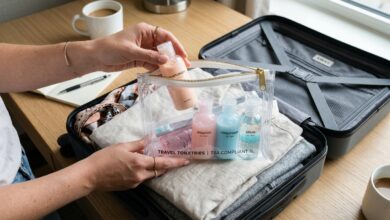
Standard cabin service often provides small plastic cups of water alongside caffeinated soda or wine. Alcohol and caffeine act as diuretics and disrupt sleep architecture, fragmenting restorative REM sleep. Pack an empty reusable bottle through airport security, fill it before boarding, and aim to drink roughly 250 milliliters of water per flight hour. Adding a pinch of mineral salts or an electrolyte tablet ensures your kidneys retain hydration rather than expelling it rapidly.
Strategic Meal Timing: Syncing Peripheral Clocks
While light synchronizes your brain, food synchronizes your peripheral organs, including your stomach, liver, and pancreas. Eating a heavy carbohydrate meal late at night in your new destination confuses digestive enzymes and triggers nighttime waking.
- Fast During Overnight Flight Legs: If your departure flight takes place during what would be sleeping hours at your destination, skip the heavy airline dinner tray and rest your digestive system.
- Eat a Protein-Rich Destination Breakfast: When morning arrives at your arrival city, consume eggs, yogurt, or lean proteins. Protein intake stimulates dopamine and orexin production, promoting alertness.
- Keep Dinner Light and Early: Eat your evening meal at least three hours before local bedtime to allow digestion to complete before core temperature drops for deep sleep.
Key Recovery Strategies at a Glance
| Strategy | Recommended Timing | Primary Biological Impact |
|---|---|---|
| Outdoor Sunlight | First 60 minutes after waking | Suppresses melatonin; elevates morning cortisol |
| Electrolyte Water | 250 ml per flight hour | Prevents cabin dehydration fatigue and headaches |
| Protein Breakfast | 07:30 to 09:00 local time | Stimulates daytime neurotransmitters and alert metabolism |
| Caffeine Cutoff | No caffeine after 14:00 local | Protects adenosine sleep pressure for night rest |
Handling Flight Delays and Transit Fatigue
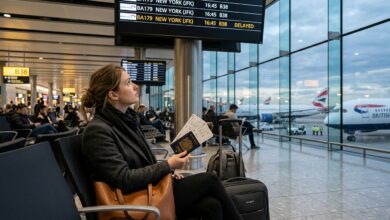
Unexpected airport disruptions compound exhaustion. If your journey involves missed connections or terminal delays, reviewing our guide on what to do if your flight is delayed helps you secure lounge access, meal vouchers, and passenger compensation rights while you preserve your energy.
For more destination advisories, cabin luggage regulations, and transit planning tips, browse our complete travel guides collection to travel smarter and arrive ready to explore.