Twenty minutes before the toss, a former fast bowler is crouched over a strip of grass, pressing a key into it and nodding. You have seen this a hundred times. Most viewers use it to make tea. But a cricket pitch report is the only moment in the broadcast where someone tells you, in advance, roughly how the next five days are going to go — and the people in the dressing rooms are listening a lot harder than you are.
The trick is knowing which parts of it are information and which parts are television.
What the pitch actually is
The surface being poked is fixed by law. Under the MCC’s Law 6, the pitch is 22 yards (20.12 m) long and 10 feet (3.05 m) wide. That rectangle is prepared by the ground authority before the match begins. From the moment play starts, the umpires — not the groundsman, not the captains, not the broadcaster — are the sole judges of whether it is fit to play on.
That matters more than it sounds. Once the game is under way, the pitch cannot be changed at all unless the umpires decide conditions have become dangerous or unreasonable, and even then both captains have to agree. Whatever the surface is at 10am on day one, both teams are stuck with it.
So a cricket pitch report is really a forecast about a thing nobody is allowed to fix.
Grass cover is the first thing to look at
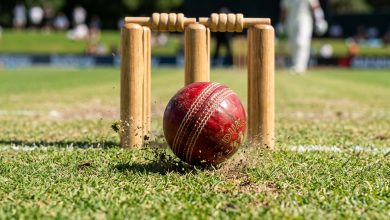
When the expert runs a hand across the strip and calls it a “green top”, he means live grass has been left on the surface. Grass holds moisture and gives the seam something to grip, so the ball is more likely to deviate sideways after it lands. That favours fast bowlers, especially in the first session.
A bare, straw-coloured strip is the opposite. Nothing for the seam to bite on, so the ball tends to come on straight and true early — and the surface is more likely to break up later, which brings the spinners in.
The mistake is treating grass as a simple switch. A thin, evenly shaved covering that is dry behaves very differently from the same amount of grass with dew still in it. What you want from the report is not the word “green” but the words that come after it: how much, how even, and how wet.
Cracks, and why day three is different
Look for the wide shots where the camera runs along the length of the strip. Cracks are not a defect — on a five-day pitch they are expected. They matter because of where they are and when they open.
Here is the rule that makes them decisive: under the ICC’s Test match playing conditions on the playing area, the pitch shall not be watered during the match. Not on day two, not on day four. The strip is mown daily, but it only ever gets drier.
That one-way process is why a pitch that looked placid on the first morning can be misbehaving by the third afternoon. A ball landing on the edge of a crack can keep low or leap. In a country where afternoon temperatures do most of the work, that drying happens faster than it would in England, and a cricket pitch report that mentions cracks already open on day one is telling you the fourth innings will be unpleasant.
The seven minutes the batting side controls
There is one small lever teams can pull, and almost no viewer knows about it. Before the start of each innings other than the first, and before each new day’s play, the captain of the batting side can ask for the pitch to be rolled — for no more than seven minutes.
Rolling presses the surface back down. A batting captain facing a strip that is starting to crumble will usually take the full seven minutes to bind it together for a session. It is a small effect, but in a close fourth innings it is the difference between a surface that is dangerous and one that is merely difficult.
Watch for it. If a captain skips the roll, he has decided the surface helps his bowlers more than his batters.
What the cricket pitch report does not tell you
A cricket pitch report is good at describing the surface in front of the camera. It is weak at three things.
It cannot see the weather properly. A pitch under cloud for two sessions plays like a different pitch, and the ball behaves differently in the air too — which is a separate mechanism from anything happening off the surface. If you want that half of the equation, it is worth understanding why a cricket ball swings and why it suddenly stops, because commentators routinely blur the two together.
It cannot see the outfield, which decides how many of your edges run for four.
And it is not a prediction of the toss decision. Captains weigh the surface against their own attack, the forecast, and in day-night games the prospect of dew making the ball hard to grip later. A green pitch does not automatically mean bowl first. It means the first hour is the hardest hour, and someone has to bat in it eventually.
When the pitch becomes the story
Occasionally a surface is bad enough that the game stops being about the cricket. The ICC has a formal process for this: the match referee rates the pitch, and a poor rating carries consequences.
An “unsatisfactory” pitch earns the venue one demerit point. An “unfit” one earns three. Under the ICC’s published process, those points stay active for a rolling five-year period. A venue reaching six is suspended from hosting international cricket for 12 months; reaching 12 means a 24-month suspension. Boards can appeal, and ratings have been overturned on review.
That is why groundsmen across the subcontinent are cautious about preparing extreme surfaces even when the home team would benefit. The pitch is a strategic asset, but there is a ceiling on how far it can be pushed.
How to use it next time
Next match, give the pitch report ninety seconds of real attention and note three things: how much grass, how dry, and whether there are cracks already. Then check your reading at the end of day one against what the bowlers actually got.
Do that for a few Tests and you will start hearing the report the way the captains do — as a set of constraints, not a prophecy.
Photo by Jiří Dočkal on Pexels