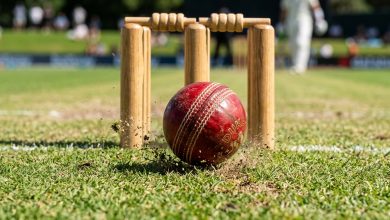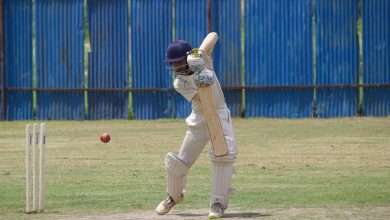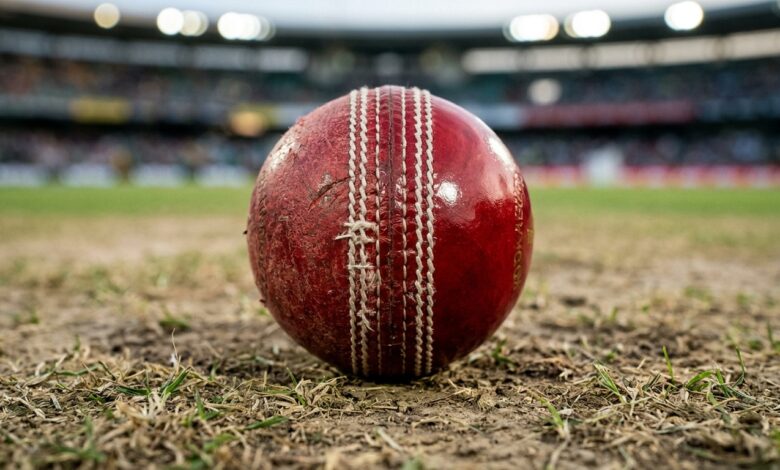
During the afternoon session of a grueling Test match. Furthermore, a fast bowler charges in with an old, battered red leather ball. The batter sets up expecting the delivery to shape away toward the slips. In addition, the ball suddenly curves violently inward toward the stumps at 145 km/h. Understanding cricket reverse swing unlocks one of the most mesmerizing and lethal arts in modern international cricket.
While conventional swing bowling dominates the early overs when the ball is brand new and polished. Furthermore, reverse swing emerges much later in an innings. Pioneered by legendary Pakistani fast bowlers Sarfraz Nawaz, Imran Khan, Wasim Akram. In addition, waqar Younis, this aerodynamic phenomenon baffled batters and scientists for decades. In this comprehensive technical guide, we break down the boundary layer physics, aerodynamic drag differences. In addition, ball maintenance techniques that make reverse swing possible.
The Aerodynamic Physics Behind Cricket Reverse Swing
To grasp why reverse swing occurs. You must first understand how a brand new cricket ball behaves in flight. When a bowler angles the raised central seam of a new ball. Furthermore, incoming airflow splits around both hemispheres:
- Laminar Boundary Layer: Air flows smoothly over the polished. Furthermore, shiny side of the ball, separating relatively early along the ball curvature.
- Turbulent Boundary Layer: Air hitting the angled raised seam trips into turbulent flow. Because turbulent air carries more kinetic energy, it remains attached to the surface longer before separating.
- Net Pressure Imbalance: Because air separates later on the seam side. Furthermore, it creates a lower pressure zone on that flank. Consequently, the ball swings in the direction of the angled seam (conventional swing).
The Aerodynamic Flip: How the Ball Reverses Direction
As a cricket match progresses past forty or fifty overs, the ball changes fundamentally. Furthermore, constant contact with abrasive turf, outfield boundaries, and batter bats roughs up one side of the leather. Meanwhile, fielding teams meticulously shine the opposite hemisphere using sweat and cloth.
Crucially, when a bowler propels this scuffed ball at high speeds (typically above 135 km/h or 85 mph). Furthermore, a dramatic aerodynamic inversion takes place:
- Rough Side Trips Early Turbulence: The heavily scarred. Furthermore, pitted texture on the rough side trips the incoming boundary air into violent turbulence immediately upon contact. Furthermore, without requiring the seam.
- Thick Boundary Layer Separation: However. In addition, the rough side is intensely abrasive. Furthermore, the turbulent layer grows excessively thick and separates prematurely from the ball surface.
- Shiny Side Maintains Late Flow: In contrast. Furthermore, the meticulously polished smooth side keeps airflow attached significantly farther around the circumference of the ball.
- Reverse Aerodynamic Force: As a result, air now separates later on the smooth, shiny side! Therefore, lower pressure forms on the shiny side. Furthermore, pulling the ball in the exact opposite direction of conventional swing.
Conventional vs Reverse Swing: Technical Benchmark Comparison
| Aerodynamic Factor. | Conventional Swing. | Reverse Swing. |
|---|---|---|
| Ball Age & Condition. | New ball (1 to 20 overs old). | Old ball (40 to 80 overs old). |
| Critical Bowling Speed. | Effective at 115–130 km/h. | Requires high velocity (135+ km/h). |
| Direction of Movement. | Swings toward the angled seam. | Swings toward the polished shiny side. |
| Point of Late Deviation. | Curves gradually throughout trajectory. | Darts late and sharply near the batsman. |
| Seam Position in Flight. | Angled 20 degrees toward slips/leg. | Held straight or angled slightly across. |
Ball Maintenance and MCC Legal Regulations
Because reverse swing requires a sharp contrast between both halves of the ball. Furthermore, fielding teams focus heavily on ball maintenance. Under Law 41 of the MCC Laws of Cricket. Furthermore, players may polish the ball using natural sweat and dry cloths provided no artificial substances or abrasive objects are applied.
In addition, modern fast bowlers hide the ball in their delivery stride to prevent batters from identifying which side is shiny until the moment of release. Furthermore, when executed with high pace and yorker accuracy. Furthermore, reverse swing remains the most unplayable weapon in world cricket. Specifically, for related ball dynamics analysis. Furthermore, read our guide on why a cricket ball swings and why it stops. Therefore, for more match insights, visit our comprehensive cricket coverage.