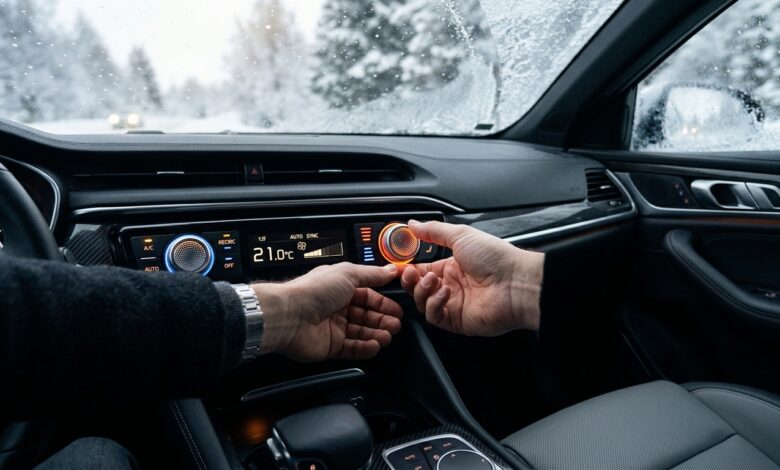
You scrape ice off your windshield on a freezing winter morning. Start your engine, turn your cabin climate dial all the way to maximum heat. Wait shivering for warmth. Yet, even after fifteen minutes of driving, your car heater blows cold air into your cabin. Dealing with a malfunctioning car heater transforms your daily winter commute into an endurance test.
Unlike household electric space heaters, vehicle heating systems do not use dedicated electrical coils. Instead, your car heater relies entirely on recycled thermal energy harvested from the engine liquid cooling system. In this comprehensive diagnostic guide, we examine the mechanics of automotive heater cores. Explore the most common cooling system failures. Provide clear troubleshooting steps to restore cozy cabin heat.
How Automotive Cabin Heaters Function
Your vehicle heating system operates as an extension of the engine cooling circuit. As internal combustion produces intense heat. Liquid coolant absorbs this thermal energy and circulates through the engine block.
A water pump routes a continuous stream of boiling-hot coolant (typically 85°C to 95°C) through rubber heater hoses into a compact heat exchanger hidden behind your dashboard called the heater core. The heater core resembles a miniature aluminum radiator. When you turn on your cabin fan. The blower motor pushes ambient air across these hot aluminum fins. Warming the air before ducting it through your dashboard vents.
Four Reasons Why Your Car Heater Blows Cold Air
When cabin air refuses to warm up, focus your diagnostic investigation on these four mechanical components:
- Stuck Open Engine Thermostat: The thermostat is a temperature-sensitive spring valve that keeps coolant inside the engine block until it reaches operating temperature. If the thermostat fails in the open position. Coolant flows continuously through the main front radiator. Preventing the engine from ever warming up sufficiently in freezing weather.
- Low Coolant Level or Air Pockets: Because the heater core sits higher than the engine block. Low coolant levels starve the heater core first. If air bubbles become trapped in the cooling circuit during a coolant change (an airlock). Hot liquid cannot enter the core tubes.
- Clogged Heater Core Passages: Over years of driving, aged coolant breaks down, forming rust scale, calcium deposits. Gelatinous sludge. These deposits block the narrow capillary tubes inside the heater core, stopping hot coolant flow completely.
- Broken Blend Door Actuator: Modern dashboards utilize small plastic motorized flaps called blend doors to mix hot and cold air. If the electric blend door actuator gear strips or the wiring fails. The flap remains stuck on the cold air intake position regardless of where you set the temperature dial.
Diagnostic Troubleshooting: Inspecting Heater Hose Temperatures
| Hose Temperature Check. | Dashboard Temperature Gauge. | Probable Mechanical Diagnosis. |
|---|---|---|
| Both heater hoses cold. | Gauge sits on cold ‘C’ mark after 15 min. | Stuck-open thermostat; engine running too cold. |
| One hose scalding hot, one hose cold. | Gauge reads normal operating temp. | Clogged heater core restricting flow. |
| Both heater hoses scalding hot. | Gauge reads normal operating temp. | Broken blend door actuator inside dashboard. |
| Both heater hoses hot, but low airflow. | Gauge reads normal operating temp. | Clogged cabin air filter or faulty blower motor. |
Step-by-Step Remedies to Restore Cabin Warmth
Follow these progressive diagnostic checks in your driveway to pinpoint and resolve the heating failure:
- Inspect Expansion Tank Coolant Level: With the engine completely cold, check your translucent coolant reservoir. If coolant sits below the “MIN” line, top it off with factory-approved premixed antifreeze.
- Bleed Air Pockets from Cooling Circuit: Park the vehicle on a slight incline with the front elevated. Remove the radiator cap on a cold engine, attach a spill-free funnel. Idle the vehicle with cabin heat on maximum until the thermostat opens and air bubbles burp out.
- Feel the Firewall Heater Hoses: Locate the two 3/4-inch rubber hoses passing through the firewall into the passenger cabin. With the engine fully warmed up, carefully touch both hoses. If one hose is hot while the other is cold. Perform a chemical reverse flush on the heater core to clear sludge.
- Listen for Blend Door Clicking: Turn the vehicle key to “ON” without starting the engine. Slowly toggle the temperature dial from cold to hot. If you hear a rhythmic tapping or clicking noise behind the glove box. The plastic blend door actuator motor has stripped gears and requires replacement.
Fixing heating faults restores comfortable winter driving and ensures your windshield defroster clears hazardous ice and condensation effectively. For related cooling system tutorials. Read our guide on why cars overheat in traffic and how to fix cooling issues. For more automotive tutorials, explore our full automotive guides archive.