You lifted the lid this morning and found a thin, sour puddle with a layer of watery whey sitting on top. The spoon went straight through it. Setting dahi at home fails this way for most people, and almost always for the same two reasons: the milk was not heated hard enough, and the pot was not held at the right temperature long enough. Both are fixable in a single batch, with nothing you do not already own.
What you need is a heavy pan, a spoon of live dahi, and somewhere warm. A kitchen thermometer helps, and a cheap one pays for itself in the first week.
Heat the milk harder than you think
Boiling is not the point. The hold is the point. The Oregon State University extension guide tells you to bring the milk to 180°F, about 82°C, and keep it there for 10 minutes for a thinner set or 20 minutes for a thick one. The University of Alaska Fairbanks guide goes slightly higher, to 185°F or roughly 85°C.
Two things happen during that hold. Competing bacteria die off, so your culture is not fighting anything for the milk. And the milk proteins unfold, which is what lets them lock into a firm gel rather than a loose sludge. Skip the hold and you get the puddle.
Stir now and then and keep the flame moderate so the bottom does not catch. If you are using loose milk from a dhodi, this step doubles as your safety boil. Tetra-pack UHT milk is already sterile, but it still needs the hold to set thick, so do not skip it there either.
Full-fat milk sets firmer than toned or skimmed, because the set depends on how much solid matter is in the pan. If low-fat milk is all you have, whisk two or three tablespoons of milk powder into the cold milk before heating. Oregon State notes that powder added to already-hot milk makes the proteins string together instead.
Cool it to the temperature the bacteria want
Now let the milk come down. You are aiming for roughly 108–115°F, which is 42–46°C. Both extension guides land inside that band.
Too hot and you kill the culture you are about to add, which is the commonest mistake in setting dahi at home after under-heating. Too cool and the bacteria work slowly, the set drags on, and you get something sour and slack.
Without a thermometer, test with the back of a finger or a clean wrist. The milk should feel clearly warm but comfortable, not something you flinch away from. Hot enough to hurt is too hot.
The starter is one spoon, not one cup
Use plain dahi with live culture, nothing sweetened or flavoured. UAF puts the quantity at about a quarter cup per quart of milk, which works out to roughly two tablespoons per litre. Oregon State’s version is two to three teaspoons per cup of milk.
More starter does not give you thicker dahi. It gives you sour dahi that sets unevenly, because you have crowded the milk with bacteria that are already past their best.
Thin the starter before it goes in. Spoon it into a small bowl, add a few spoons of the warm milk, whisk until smooth, then stir that back into the pan. A cold lump dropped straight into warm milk never disperses, and you get set patches and liquid patches in the same pot.
Four to eight hours, and hands off
Cover the pot and leave it somewhere that holds 108–115°F. Oregon State says six to eight hours undisturbed. UAF says four to seven. Where you land inside that range depends on how steady your warm spot is.
Undisturbed is the operative word. Every time you shift the pot, tilt it, or lift the lid for a look, you break the gel that is forming. It does not knit back together, and that is exactly where the pool of whey on top comes from.
The dahi is ready when it has set firm and pulls slightly away from the side of the pot as you tip it. UAF describes this as the point where the acid level reaches pH 4.6. You do not need to measure it — you can see it.
Where to set dahi at home without a yogurt maker
A clay pot wrapped in a thick towel and shut inside a cupboard is the traditional answer, and it works whenever the kitchen itself is warm. Clay insulates well and draws a little moisture out through its walls, which is the usual explanation for why matka dahi sets firmer.
In a cooler month, or an air-conditioned kitchen, you need help. An oven with only the light switched on makes a good warm box. So does a cooler or casserole with a bottle of hot water set beside the pot. For a small quantity, a thermos flask is enough.
What to avoid is a warm spot that keeps changing — a windowsill that catches sun and then loses it, or a shelf beside a stove you keep turning on and off. Steady and slightly too cool beats hot and swinging.
Chill it, then judge it
Move the pot to the fridge as soon as it has set. Chilling halts the fermentation and firms the gel further, and dahi that looked borderline at hour seven often looks right after four hours cold. Judging it while warm is how people talk themselves into a second, over-soured batch.
Held at 40°F, or 4°C, and below, both extension guides give homemade yogurt a shelf life of roughly 10 to 21 days. If the power goes while it is chilling, the same rules apply as to everything else in there — our guide to what to keep and what to bin during load-shedding covers how long a closed fridge holds its cold.
Keep two spoons back in a clean jar as the starter for your next pot.
When setting dahi at home keeps failing
Carry a starter forward batch after batch and it can drift. The dahi turns slimy, stringy or stubbornly thin whatever you do with the temperatures. UAF’s troubleshooting advice is blunt on this point: when the problems persist, buy a fresh cup of commercial dahi and start again from that.
Before blaming the culture, though, check those two temperatures. Under-heated milk and over-hot milk between them account for nearly every failed pot.
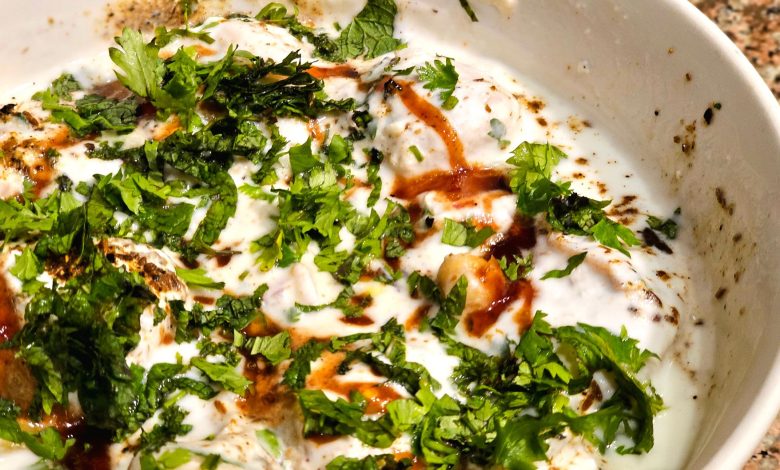
Photo by Muhammad Khawar Nazir on Pexels