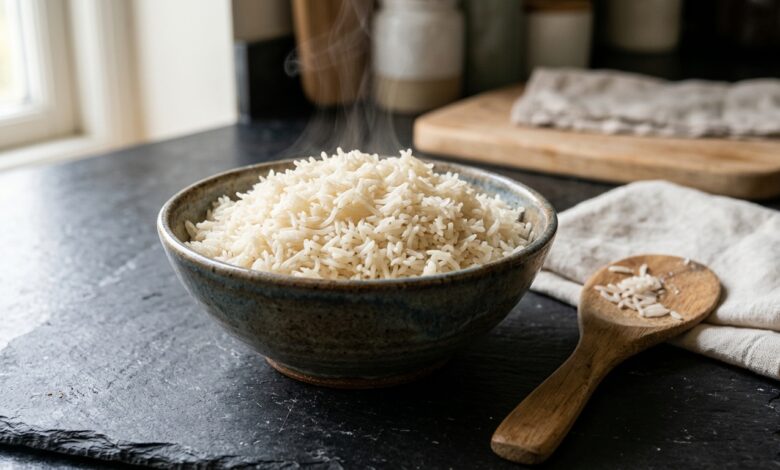
You lift the lid off your cooking pot expecting aromatic, fluffy, individual grains of steamed rice. Find a thick, gelatinous, glue-like paste instead. Understanding why rice turns mushy is a fundamental culinary skill that transforms frustrating kitchen mishaps into restaurant-quality side dishes.
Cooking rice seems deceptively simple, yet it is one of the most chemically sensitive procedures in home cooking. Rice grains contain amylose and amylopectin starches that react dramatically to water ratios, agitation, and steaming temperatures. In this detailed kitchen guide, we explain the food science behind soggy rice. Highlight the critical mistakes cooks make. Reveal professional chef tricks to salvage overcooked rice before dinner.
The Starch Science: Why Rice Grains Burst and Clump
Rice kernels are composed primarily of compact starch granules. When you heat rice in water. Individual granules absorb liquid and swell through a process called starch gelatinization.
Around 65°C to 75°C, the outer cellular walls of the rice grain soften. If the water ratio and cooking duration are balanced. The starch absorbs liquid while the kernel retains its structural integrity. However, if excess water is present or if boiling continues too long. The starch granules absorb far more moisture than their cell walls can contain. Consequently, the grains rupture violently, spilling sticky amylopectin molecules into the cooking liquid. Therefore, this creates a dense, pasty starch slurry that binds adjacent grains into a mushy clump.
Common Preparation Errors Why Rice Turns Mushy
When rice turns into paste, one of these four fundamental preparation errors is almost always responsible:
- Skipping the Cold Water Rinse: Rice kernels rub against each other during milling and shipping. Producing a powdery layer of loose surface starch. If you cook rice without rinsing. This loose starch dissolves immediately into the boiling water, forming thick wallpaper paste. Rinse your rice in cold water until the water runs clear.
- Using Too Much Water: Many home cooks rely on vague “finger knuckle” measurements rather than exact volumetric or weight ratios. Long-grain varieties (like Basmati or Jasmine) require significantly less water (typically a 1:1.5 ratio) compared to short-grain varieties.
- Stirring the Pot While Simmering: Stirring rice as it cooks is the fastest way to ruin it. Agitation with a metal spoon physically shears the delicate softening grain walls. Squeezing internal starch into the liquid. Once you reduce heat to low, leave the lid on and never stir.
- Failing to Rest and Steam with Lid On: Turning off the burner and immediately serving hot rice leaves moisture unevenly distributed. Letting the covered pot rest off the heat for 10 minutes allows internal steam to distribute evenly. Firming up the grain surface.
Precision Water-to-Rice Ratios by Grain Variety
| Rice Variety. | Grain Shape & Starch Profile. | Ideal Water-to-Rice Ratio. | Cook Time (Simmer). |
|---|---|---|---|
| Aged Basmati Rice. | Extra long; high amylose (firm). | 1 cup rice to 1.5 cups water. | 12 to 14 minutes. |
| Jasmine Rice. | Long grain; aromatic, tender. | 1 cup rice to 1.25 cups water. | 12 minutes. |
| Long Grain White Rice. | Standard long grain. | 1 cup rice to 1.5 cups water. | 15 minutes. |
| Medium Grain (Calrose). | Medium grain; higher stickiness. | 1 cup rice to 1.33 cups water. | 15 minutes. |
| Brown Rice. | Whole grain with fibrous bran. | 1 cup rice to 2.0 cups water. | 40 to 45 minutes. |
Clever Chef Tricks to Save Mushy Overcooked Rice
If you uncover your pot and discover wet. Soggy rice, do not throw it in the trash bin. Use these proven culinary recovery techniques:
- The Sheet Pan Oven-Drying Technique: Line a wide baking sheet with parchment paper. Spread the soggy rice across the pan in a thin, single layer. Place the sheet into an oven preheated to 120°C (250°F) for 5 to 8 minutes. The dry, gentle oven heat evaporates surface moisture rapidly without scorching the rice, separating individual grains.
- The Single Slice of Bread Trick: If the rice has just finished cooking and is merely slightly damp. Place a single slice of dry white sandwich bread directly on top of the rice. Cover the pot with the lid and let it sit for ten minutes. The dry porous bread absorbs trapped condensation like a sponge.
- Repurpose into Crispy Fried Rice or Rice Pudding: If the grains are too soft for a standalone side. Spread the rice onto a plate and refrigerate it uncovered overnight. Cold refrigeration gelatinizes starches, drying out the grains so you can toss them into smoking-hot woks for crispy Chinese egg fried rice or simmer them with milk and cardamom for rich dessert kheer.
Mastering grain hydration ensures every rice batch turns out fragrant, fluffy, and perfectly textured. For related grain cooking tutorials. Read our complete guide on cooking Basmati rice with separate grains every time. For more delicious culinary recipes, check our full food collection.