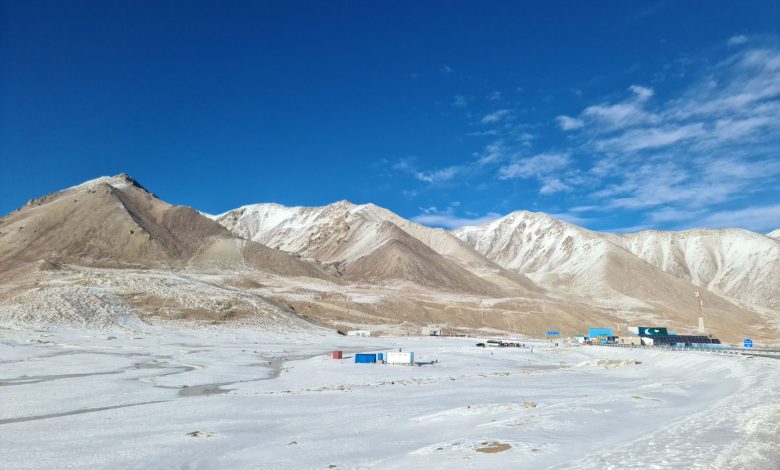
You leave Lahore at four in the morning. By the following evening you are standing on Babusar Top at 4,173 metres, taking photos in a hoodie, slightly out of breath and blaming the cigarettes. Two hours later, in a guesthouse in Chilas or Naran, your head is splitting and you cannot eat dinner. You assume it was the road, the food, the heat in the car.
It usually was not. Altitude sickness in Pakistan catches out ordinary tourists far more often than it catches climbers, because the climbers plan for it and you did not. The Karakoram Highway will lift you three kilometres in a day without asking whether your body agrees.
Where the risk actually begins
The number that matters is lower than most people guess. According to the CDC’s Yellow Book guidance on high-altitude travel, any unacclimatised traveller going to a sleeping altitude of 2,450 metres or higher — and sometimes lower — is at risk of altitude illness.
Look at where that puts the standard northern itinerary. Karimabad in Hunza sits at roughly 2,500 metres. So does Skardu. These are not base camps; they are towns with hotels, bakeries and mobile signal. Sleep in either on your first night out of the plains and you are already at the threshold.
The day trips go much higher. Khunjerab Pass, on the official Gilgit-Baltistan tourism listing, is 4,693 metres. The Deosai plateau averages 4,114 metres. Babusar Top is 4,173 metres. You can reach any of them within a few hours of a bed at 2,500 metres.
What altitude sickness in Pakistan feels like
Acute mountain sickness — AMS, the mild and common form — announces itself with a headache. The CDC calls headache the cardinal symptom, usually joined by at least one of these: loss of appetite, dizziness, fatigue, nausea, and sometimes vomiting. It typically starts two to twelve hours after you arrive.
Notice how easily every item gets blamed on something else. Fatigue after fourteen hours in a Hiace. No appetite because the food is unfamiliar. A headache from the sun. That misattribution is the real danger, because it keeps people climbing.
The working rule is simple: if you have a headache at altitude and you did not have one at sea level, treat it as altitude sickness until proven otherwise. Stop going up. Not down yet, necessarily — just stop.
The two versions that can kill you
Most AMS is miserable and harmless. Two rarer conditions are not.
High-altitude cerebral edema, or HACE, is swelling of the brain. The CDC describes it as neurological: altered mental status, ataxia, confusion and drowsiness, looking much like alcohol intoxication. If a member of your group cannot walk a straight line heel-to-toe, or is talking oddly, or is unusually sleepy, that is the sign.
High-altitude pulmonary edema, or HAPE, is fluid in the lungs. It starts with chest congestion, a cough, breathlessness that seems out of proportion to the effort, and a sudden drop in how much you can do. Left alone it becomes breathlessness at rest and outright respiratory distress, sometimes with bloody sputum.
Both need immediate descent. Not tomorrow morning, not after the sunrise photo.
How fast you can safely go up
The medical advice on ascent rate is specific and easy to remember. Above 3,000 metres, do not increase your sleeping altitude by more than 500 metres per night, and add an extra night to acclimatise for every 1,000 metres of sleeping-altitude gain.
That word “sleeping” is doing the work. A day trip to a high place with an evening return to a lower one is far less stressful on the body than staying up there. So the standard Hunza pattern — sleep in Karimabad, drive up to Khunjerab, come back down for the night — is genuinely a sensible way to see the pass, not just a convenient one. Climb high, sleep low, whether or not you meant to.
The riskiest thing you can do is the opposite: reach somewhere high in the late afternoon and decide to stay because the light is nice.
Flying in is not the shortcut it looks like
Flying to Skardu skips two days of road. It also skips the acclimatisation that road gives you. The CDC notes that where travellers ascend rapidly by air to above 3,400 metres, rates of altitude illness approach 50 percent, and recommends a low threshold for preventive medication in those cases.
Skardu sits well below that figure, so a flight there is not automatically dangerous. But you land at 2,500 metres with a body that was in the plains an hour ago, and your first night is the one to take seriously. Do the drive to Deosai on day three, not day one.
Your first 48 hours
Two pieces of standard advice, both easy to follow and both routinely ignored: avoid alcohol for the first 48 hours at altitude, and stick to mild exercise for the first 48 hours.
Add the practical ones for the Pakistani north. Drink more water than you feel like — dry mountain air pulls fluid out of you without the sweat you would notice in Karachi. Do not make the first day a hiking day. And build one spare day into the plan, because avoiding altitude sickness in Pakistan depends on having 24 hours you can afford to lose.
Coverage is worth planning around too. Mobile signal thins out fast once you leave the main valleys, and while a travel data option like the eSIM plans covered in our Travel section helps in the towns, do not count on calling for help from a side valley.
About the tablets
Acetazolamide, sold in Pakistan under various brand names, is the drug usually prescribed to speed up acclimatisation. It is a prescription medicine with real side effects, and the sensible route is a conversation with a doctor before you travel, not a pharmacy counter in Gilgit at 9pm.
It also does not make you immune. Medication reduces risk; it does not remove the need to watch symptoms and it does not license a faster ascent.
The rule that matters most
Here is the one line worth memorising, straight from the guidance: if symptoms get worse while you stay at the same altitude, despite rest and treatment, descent is mandatory.
Descent is the treatment. Oxygen helps, tablets help, resting helps — but going down is what reliably works, and a few hundred metres is often enough. Deosai and Khunjerab are only open in summer anyway. They will be there next year, and you can come back and see them properly.