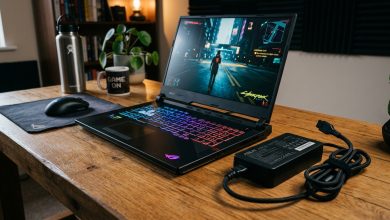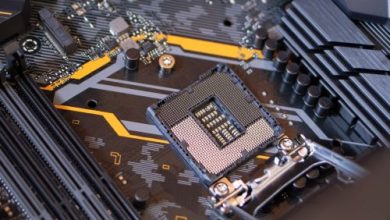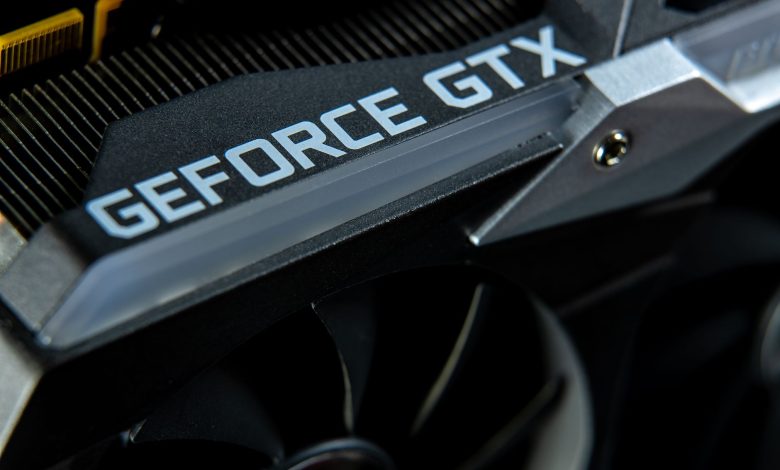
You have been here before. The trailer looks incredible, the store page says your
graphics card clears the minimum requirements, and forty minutes after
installing you are staring at a slideshow with the settings already on low.
The requirements box is not lying to you. It is just answering a narrower
question than the one you are asking.
Minimum means “it will launch”
A minimum specification is the floor at which the game runs without crashing.
It is usually measured at 1080p, on the lowest preset, targeting 30 frames per
second. Almost no publisher states those conditions on the store page, which is
where the confusion starts. If you are playing on a 1440p monitor and you
expected 60fps, “minimum” was never describing your situation.
Recommended is vaguer still. It generally means 1080p at 60fps on medium or
high settings, but there is no standard behind the word, and two studios will
use it to mean different things.
So read the numbers, then ask the question the box does not answer: at what
resolution, at what settings, and at what frame rate?
VRAM is the cliff edge, not a slope
Most hardware shortfalls are graceful. A slightly weak processor gives you a
slightly lower frame rate. Video memory does not work that way.
When a game needs more VRAM than your card has, it starts shuffling textures
between graphics memory and system memory mid-play. You do not get a lower
average frame rate. You get a stable frame rate punctuated by hitches every
time you turn a corner or a new area loads. That stutter is far more unpleasant
than a lower but consistent frame rate, and it is the single most common cause
of “my card is on the list but the game feels broken”.
Find your card’s exact VRAM figure and treat the game’s stated requirement as a
hard wall rather than a suggestion. If you are at or just above it, plan to turn
texture quality down one notch — texture settings cost VRAM and cost almost
nothing in processing, so it is usually the cheapest concession you can make.
Know exactly which card you have
“GTX 1650” is not specific enough. There are desktop and laptop versions of
many cards with meaningfully different performance, and the suffixes matter more
than they look — a Ti or a Super variant can sit a whole tier above the plain
model. A laptop chip with the same name as a desktop chip is often
substantially slower, because it is running in a fraction of the power budget.
On Windows, press the Windows key, type dxdiag, and open the Display tab. It
lists your exact adapter name and its dedicated memory. Task Manager’s
Performance tab shows the same thing alongside your processor and installed RAM.
Write all of it down somewhere; you will check it constantly.
Look for the 1% lows, not the average
When you search for benchmarks of a game, you will mostly be shown average
frame rates. The average hides the thing you actually feel.
Reviewers who publish “1% low” figures are telling you how bad the worst moments
get. A game averaging 60fps with 1% lows at 55 feels smooth. A game averaging
60fps with 1% lows at 22 feels awful, and you will notice it in every fight.
If a benchmark only gives you an average, it has told you about a third of the
story.
Upscaling has quietly moved the goalposts
Increasingly, recommended specifications assume upscaling is switched on —
technologies like DLSS, FSR and XeSS render the game at a lower internal
resolution and reconstruct the image up to your monitor’s resolution.
This matters twice over. First, a published requirement may only hold with
upscaling enabled, which the store page rarely says out loud. Second, and more
usefully, it means an older card can often clear a bar it would otherwise miss.
Check whether the game supports an upscaler your card can actually use — some
are vendor-locked to specific hardware, others run on almost anything.
Two shortcuts worth knowing
Steam Deck Verified. Whatever you think of the hardware, the Deck is a
fixed, modest specification, and a game carrying the Verified badge has been
confirmed to run properly on it. It is a decent proxy for “this game has been
optimised rather than shipped and forgotten”.
Search the game’s name plus your card’s name. Someone with your exact
hardware has almost certainly posted a video or a forum thread. Thirty seconds
of that is worth more than an hour of reasoning from specification tables.
Your actual safety net
If you get it wrong, you are not stuck with it. Steam’s refund offer applies
within two weeks of purchase with less than two hours of playtime — in Valve’s
words, “The Steam refund offer, within two weeks of purchase and with less than
two hours of playtime, applies to games and software applications on the Steam
store.”
Two hours is enough to test properly, so use it deliberately. Do not spend it
in the opening cutscene. Get to a busy area, a crowded fight, an open vista —
the places where performance actually collapses — and watch the frame rate
there. If it does not hold up, request the refund before the clock runs out.
Other stores run their own policies, so check before you buy rather than after.
The short checklist
- Find your exact GPU model, its VRAM, your processor and your installed RAM
- Compare against recommended, not minimum, unless 30fps on low is genuinely fine
- Treat the VRAM figure as a hard wall
- Search for 1% low benchmarks, not averages
- Check whether an upscaler your hardware supports is available
- Test inside two hours and under two weeks, in the demanding parts of the game
None of this takes long once you have your own numbers written down. The hour
you spend the first time is the last hour you will waste on a game that was
never going to run.
Photo by Sergei Starostin on Pexels