You turn the ignition key in the morning, but the starter motor clicks weakly. Dealing with a car battery draining overnight indicates a hidden electrical drain stealing power while parked.
In fact, this issue is known mechanically as a parasitic battery draw. While standard vehicle computers draw minimal standby current, a malfunctioning relay can drain a battery quickly. In this diagnostic guide, we explain why your car battery draining overnight occurs and how to locate the faulty circuit with a multimeter.
Measuring Parasitic Draw When a Car Battery Drains Overnight
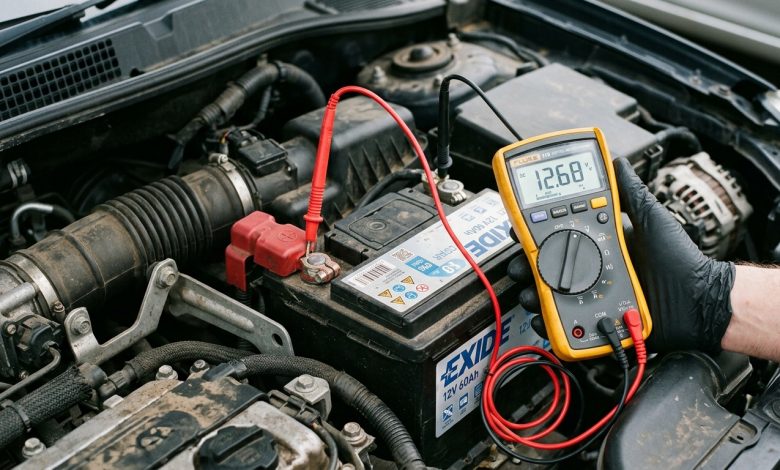
To diagnose an overnight drain, you need a digital multimeter measuring DC milliamps. First, shut off all interior lights, close all doors, and latch the hood mechanism. This step ensures vehicle control modules enter full sleep mode.
Next, disconnect the negative battery terminal. Then, connect your multimeter probes in series between the battery post and cable. Normal vehicles consume between 20 and 50 milliamps to maintain clock presets. However, if your meter reads above 80 milliamps, an active circuit is draining your battery steadily.
Isolating the Faulty Fuse Circuit
To locate the exact culprit, pull fuses one by one from the fuse box. Observe your multimeter display carefully after removing each fuse. When you pull the fuse supplying the rogue component, current drops immediately to normal sleep levels.
Common culprits include glove box lights, stuck AC relays, and improperly wired dashcams. Similarly, aftermarket alarms and audio amplifiers often fail to enter standby mode, consuming massive current continuously.
Summary: Solving Overnight Battery Drain
Overall, resolving an overnight drain requires systematic multimeter testing rather than repeatedly replacing batteries. By isolating high-draw circuits, you protect your battery and ensure reliable morning starts. For more automotive guides, browse our automotive troubleshooting guides.