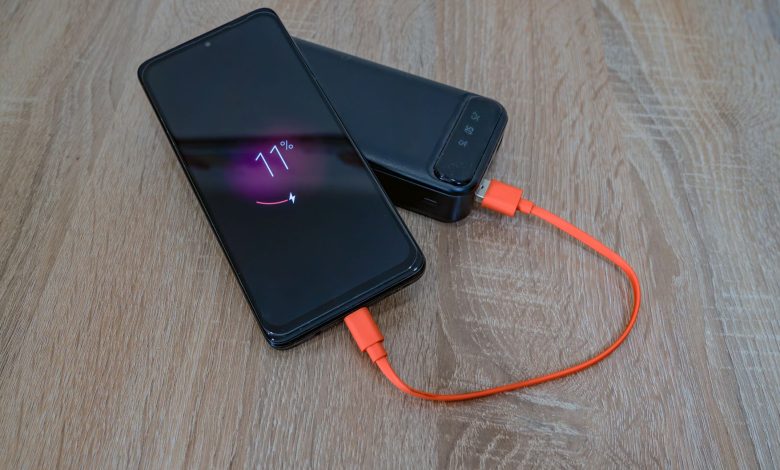

You are packing the night before a flight, and there it is at the bottom of the bag: the 20,000 mAh brick you bought so your phone survives a whole day without a plug. It has to come. The question is whether it goes in your hand luggage, in your suitcase, or stays at home — and the power bank rules that decide the answer changed this year.
Since 27 March 2026, the international baseline is tighter than most travellers realise. Power banks belong in the cabin, you can carry two, and you cannot plug one into the aircraft’s USB socket to top it up. Several airlines are stricter still. Getting it wrong means a bin at the security desk, or an argument at the gate with the queue behind you.
What the new power bank rules actually say
Airlines follow the ICAO Technical Instructions, and IATA passes the detail on to operators. The March 2026 addendum sets the floor: a power bank “must be carried as carry-on baggage”, “must not be recharged while onboard the aircraft”, and “no more than two power banks may be carried per person”, according to IATA’s guidance to operators.
Each bank has to be protected against short circuits — original packaging, its own pouch, or tape over exposed terminals. The size ceiling is 100 watt hours per bank, and anything from 100 to 160 Wh needs the airline’s approval before you travel, per IATA’s passenger guidance.
Checked baggage has been off limits for power banks for years, and that has not softened. A lithium cell that overheats in the hold is a fire nobody can reach for hours. In the cabin, crew can get to it in seconds. Nearly every rule here follows from that one fact.
Find the watt-hour number before you pack
Here is the part that catches people out. Airlines measure in watt hours (Wh) — how much energy the pack holds. Power banks are sold in milliamp hours (mAh). They are different units, and the big mAh number on the box does not tell you whether you are over the limit.
Most banks print the Wh figure on the casing in small type, often beside the model number. Look there first. If only mAh is printed, the US Federal Aviation Administration gives the conversion in its battery guidance for passengers: “divide mAh by 1000 (to get to Ah) and then multiply by the V” — the voltage, which for a lithium-ion pack is normally 3.6 or 3.7 volts.
Run the numbers and the picture gets clear. A 20,000 mAh bank at 3.7 V works out at 74 Wh, comfortably inside the limit. A 27,000 mAh bank lands at about 100 Wh, right on the line. A 30,000 mAh bank is roughly 111 Wh, which puts you in approval territory — and IATA says the 100 to 160 Wh band stops being permitted altogether under the 68th edition of the dangerous goods regulations from 1 January 2027. If you are buying a bank now and expect to fly with it, under 100 Wh is the safer purchase.
Two, one, or none: check your airline
The baseline says two per person. Your airline is allowed to be stricter, and some are.
Emirates allows one. Under rules in force since 1 October 2025, customers “may carry one power bank that is under 100 Watt Hours”, it “may not be used to charge any personal devices onboard”, and charging it from the aircraft’s supply is not permitted. It also cannot go in the overhead bin — Emirates says it belongs in the seat pocket or a bag under the seat in front of you.
Qatar Airways allows two, each under 100 Wh, cabin only. It differs from Emirates on use: during non-critical phases of flight you may charge a device from your bank, “only if they remain in the passenger’s direct supervision and are not stowed in carry-on baggage or in the overhead bin while charging”. Charging the power bank itself is prohibited at all phases of flight, according to the airline.
Two carriers on the same route, two different answers about the same device in your bag. The power bank rules set a floor, not a ceiling, so check the airline you actually booked rather than the one you flew last year.
Why this bites harder if you pack for load-shedding
If you bought your power bank to get through load-shedding rather than for travel, you probably bought big. The 20,000 and 30,000 mAh units are everywhere on local shelves for exactly that reason, and the 30,000 is the one most likely to start a conversation at the gate.
There is also a habit worth breaking before you fly. At home, a power bank lives in your bag and gets topped up whenever the electricity is on. In the air that habit is banned outright: no aircraft socket, no charging in the seat. Arrive at the airport with it already full, because it is not getting another chance until you land.
And if your phone is doing the heavy lifting abroad — maps, boarding passes, calls home — then the battery plan and the data plan are the same plan. Our guide to eSIM data plans for travellers covers the connectivity half of that; the power bank covers the rest.
The five-minute check before you leave for the airport
Take the bank out of the bag and read the label. If no Wh figure is printed and you cannot work it out from mAh and volts, expect security to make the cautious call. An unmarked pack is one an inspector has no way to approve.
Put it in the bag you are carrying on, never the one you are checking. If the gate asks to send your hand luggage to the hold on a full flight, open it and take the power bank out first. The same goes for spare camera and laptop batteries: cabin only, terminals covered, one per pouch.
Once you are seated, keep it in the seat pocket or under the seat in front, where you can see it and reach it. That is the whole reason the rule exists. If a cell starts to swell, smell or get hot, somebody needs to notice while it is still a small problem.
Photo by Eleonora Vokueva on Pexels